Two-Step Vehicle Washing: How Acid and Alkaline Cleaners Work Together to Remove Heavy Road Grime
Anyone who washes trucks, trailers, farm equipment, construction machinery, mining equipment, oilfield vehicles, or railroad maintenance equipment knows one thing: heavy-duty grime does not come off with cute little car soap.
Road film, diesel soot, salt, clay, mud, grease, bugs, hard water minerals, hydraulic fluid, and oilfield residue all bond to surfaces in different ways. That is why professional fleet washers often use a two-step cleaning process that combines an acid cleaner and an alkaline detergent.
Done correctly, two-step washing can produce a cleaner surface with less brushing, less labor, and better consistency. Done incorrectly, it can streak paint, damage aluminum, waste chemical, or create a safety problem.
Here is how the process works.
What Is Two-Step Vehicle Washing?
Two-step vehicle washing is a professional cleaning method that uses two different types of cleaners in sequence:
1. An acid cleaner
2. An alkaline detergent
The acid step targets mineral-based contamination such as road salt, oxidation, hard water deposits, and certain types of bonded road film.
The alkaline step targets organic and petroleum-based grime such as grease, oil, diesel soot, bugs, carbon film, and general dirt.
Together, they help break the static bond that makes road film cling to trucks and equipment. That is the magic. Not wizard magic — chemistry magic. Slightly less dramatic, much more useful.
Why Use Both Acid and Alkaline Cleaners?
Most heavy equipment grime is not just one type of dirt.
A semi-truck running across the Midwest may have road salt, diesel soot, bugs, grease, and oxidized film on the same surface. A farm combine may have clay, crop residue, hydraulic oil, and dust. Mining and oilfield equipment may carry petroleum residue, iron-rich dirt, drilling mud, and heavy mineral contamination.
One cleaner rarely handles all of that well.
Acid cleaners help remove:
· Road salt residue
· Mineral film
· Oxidation
· Hard water spotting
· Inorganic deposits
· Some forms of bonded road film
Alkaline detergents help remove:
· Grease
· Oil
· Diesel soot
· Bugs
· Organic grime
· Carbon film
· Heavy dirt and traffic film
When used together in the right order, the two products attack grime from both sides.
The Correct Two-Step Washing Process
Step 1: Pre-Rinse Heavy Dirt and Mud
Before applying chemical, rinse off loose dirt, mud, sand, and heavy debris.
Chemicals are designed to clean the surface. They are not designed to tunnel through three pounds of dried mud. Pre-rinsing allows the detergents to reach the actual film bonded to the vehicle or equipment.
For heavily soiled equipment, this first rinse matters.
Step 2: Apply the Acid Cleaner First
The first chemical step is typically the acid cleaner.
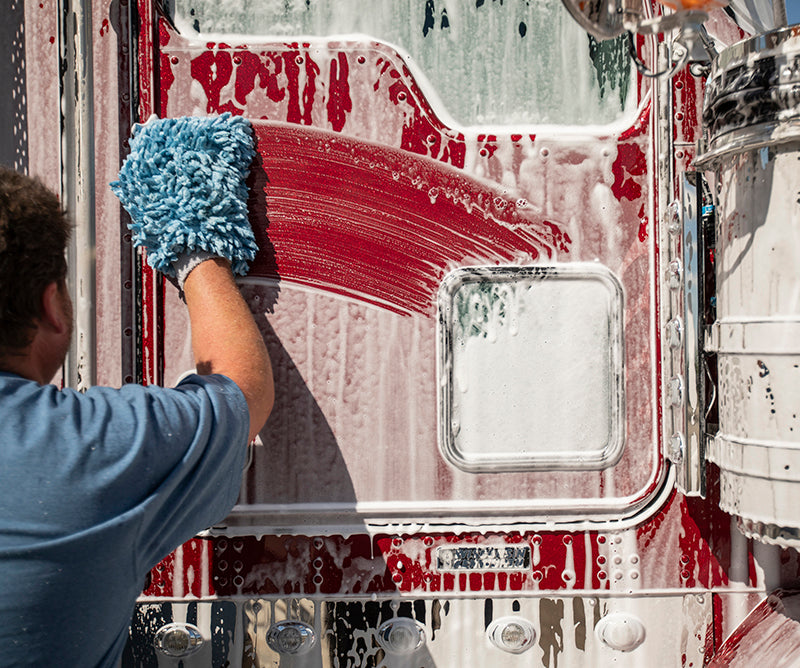
Apply the acid cleaner using a low-pressure sprayer, foam cannon, downstream injector, or dedicated wash system. Start from the bottom and work upward. This helps reduce streaking and keeps the chemical dwell more consistent across the surface.
Allow the acid cleaner to dwell briefly, usually around 30 to 60 seconds, depending on the product, dilution, temperature, and soil load.
Do not let the product dry on the surface.
That last sentence deserves respect. If chemical dries on paint, aluminum, glass, decals, or polished surfaces, you may have created a problem that no one wants to explain to the fleet manager.
Step 3: Apply the Alkaline Detergent Second
After the acid step, apply the alkaline detergent over the surface.
The alkaline detergent helps neutralize and lift grease, oils, bugs, soot, organic grime, and remaining road film. Again, apply from the bottom up for better coverage and reduced streaking.
Allow a short dwell time, usually another 30 to 60 seconds.
Keep the surface wet the entire time.
Step 4: Rinse Thoroughly From Top to Bottom
After both chemical steps have done their work, rinse thoroughly with clean water using appropriate pressure and water volume.
Rinse from the top down so loosened grime and chemical residue flow off the vehicle or equipment.
Take extra time around:
· Mirrors
· Door handles
· Seams
· Hinges
· Aluminum trim
· Fuel tanks
· Wheels
· Undercarriage areas
· Decals and graphics
· Toolboxes and steps
Chemical left behind can cause streaking, spotting, or surface damage.
Important: Never Mix Acid and Alkaline Cleaners Together
Two-step washing does not mean mixing acid and alkaline products together in a bucket, tank, tote, sprayer, or injector.
That is not two-step washing. That is how you waste product, reduce performance, and potentially create a safety hazard.
The correct method is sequential application:
Acid cleaner first → alkaline detergent second → rinse thoroughly
Use separate containers, separate lines when possible, and clearly labeled chemicals.
When Should You Use a Two-Step Wash?
Two-step washing is especially useful for:
· Semi-trucks and trailers
· Fleet vehicles
· Dump trucks
· Cement trucks
· Garbage trucks
· Farm equipment
· Combines and tractors
· Construction equipment
· Excavators and loaders
· Mining equipment
· Oilfield and drilling equipment
· Railroad maintenance vehicles
· Salt trucks and winter road equipment
If the vehicle or machine lives in a world of road film, diesel soot, salt, grease, and industrial dirt, two-step washing is usually the better process.
Special Surface Cautions
Two-step washing is powerful, but not every surface should be treated the same way.
Use caution with:
Polished aluminum
Strong acid cleaners can haze, whiten, or streak polished aluminum if the product is too aggressive, too concentrated, or left on too long.
Chrome and brightwork
Test first and avoid excessive dwell time.
Decals, wraps, and graphics
Use appropriate dilution and avoid letting chemical dry.
Fresh paint
New paint may be more sensitive. Test before full application.
Hot surfaces
Never apply strong cleaners to hot metal in direct sun if you can avoid it. Heat speeds drying and increases streaking risk.
Glass
Rinse thoroughly and do not allow chemicals to dry.
When in doubt, test a small area first.
What About Very Greasy Equipment?
For extremely greasy equipment, such as oilfield machinery, shop trucks, undercarriages, fifth wheels, or heavy construction equipment, you may need a targeted degreasing step first.
A practical approach:
1. Pre-rinse heavy debris.
2. Apply alkaline degreaser to the worst grease and oil deposits.
3. Rinse.
4. Then perform the standard acid-to-alkaline two-step wash.
This prevents the acid step from being wasted on heavy petroleum grime.
Common Two-Step Washing Mistakes
Using too much chemical
More chemical does not always mean cleaner. It often means more streaking, more waste, and more risk.
Letting chemical dry
This is one of the fastest ways to create stains or streaks.
Washing in direct sun
Sun and hot panels shorten dwell time and increase the risk of damage.
Using the wrong product on polished aluminum
Not all acids are aluminum-safe.
Skipping the rinse
Chemical residue left behind can cause surface problems.
Mixing chemicals together
Again, do not do this. Chemistry is useful. Chemistry without discipline is a lawsuit with bubbles.
Best-Practice Two-Step Wash Summary
For most trucks and heavy equipment:
1. Pre-rinse loose mud, dirt, and debris.
2. Apply acid cleaner from bottom to top.
3. Allow short dwell time without drying.
4. Apply alkaline detergent from bottom to top.
5. Allow short dwell time without drying.
6. Rinse thoroughly from top to bottom.
7. Inspect and repeat only where needed.
This process helps remove road film, salt, grease, bugs, soot, and mineral contamination more effectively than a single soap step.
Final Thoughts
Two-step vehicle washing is one of the most effective ways to clean trucks, fleets, farm equipment, construction machinery, mining equipment, railroad maintenance vehicles, and oilfield equipment.
The reason it works is simple: different types of grime require different chemistry.
The acid cleaner attacks mineral-based contamination. The alkaline detergent attacks grease, oil, soot, bugs, and organic grime. Together, they create a more complete cleaning process for equipment that works hard and gets filthy doing it.
At Big Rig Soap, we build cleaning products for people who deal with serious grime every day — truckers, farmers, fleet managers, construction crews, mining operators, oilfield
teams, railroad maintenance crews, and anyone else whose equipment does not get the luxury of staying clean.
Because when the job is dirty, the soap better not be delicate.
Share:
What to Look for in Foam Cannon Soap for Trucks (and What Most People Get Wrong)
The Best Degreaser for Diesel Engines: What Actually Works (and Why)